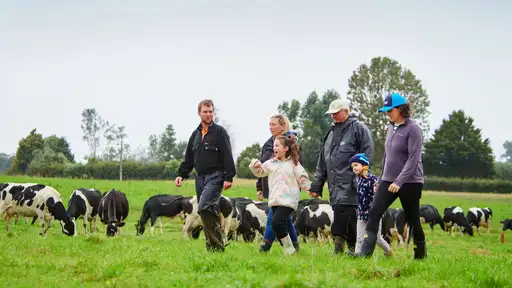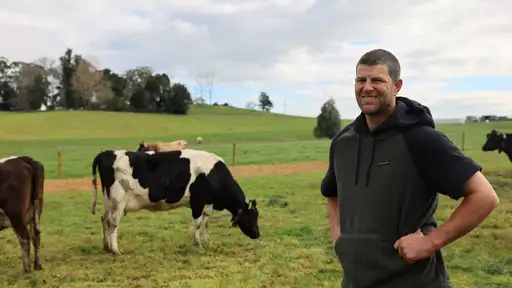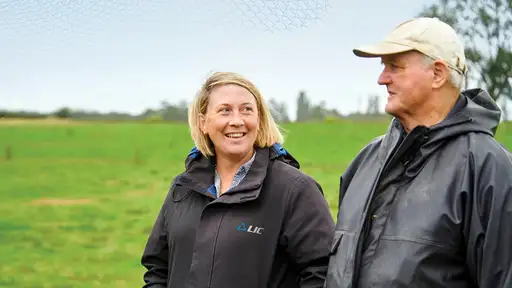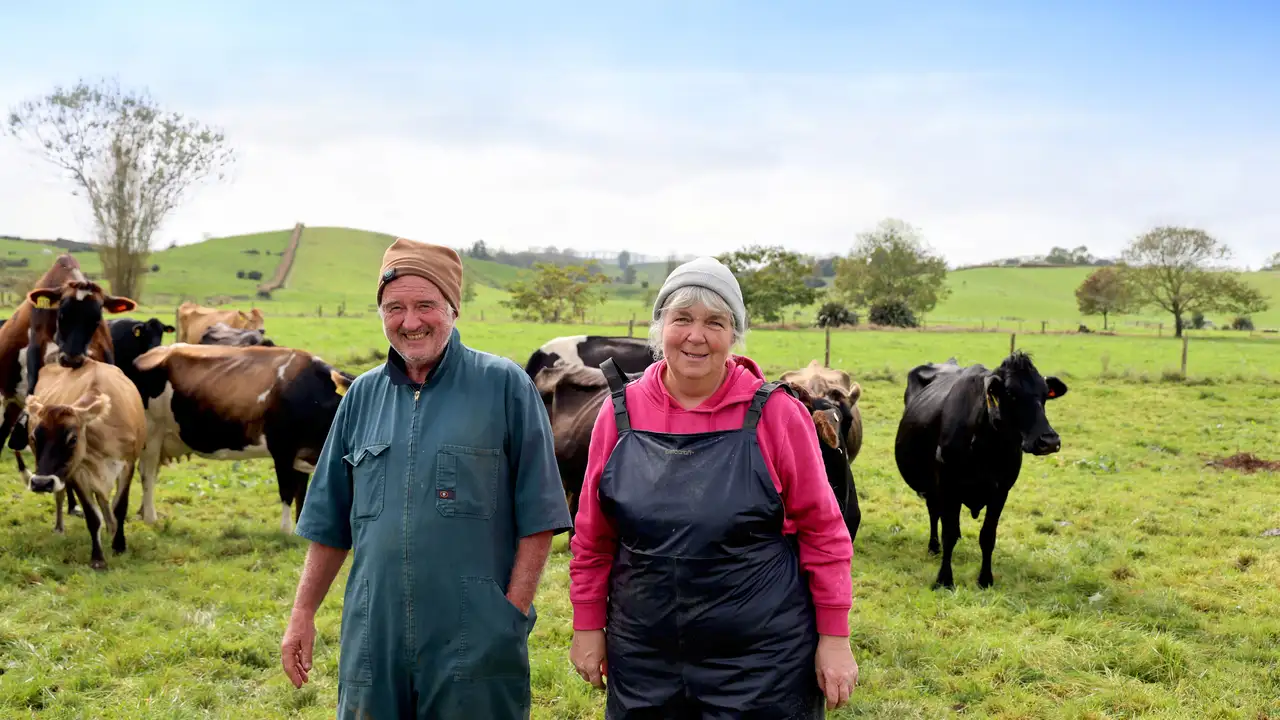
For Donald and Nicky McGiven, their focus is on staying on the land for as long as they can, and ensuring the workload remains sustainable as they do.
On their 62-hectare farm in Ōtorohanga, Donald and Nicky use the integration capabilities in MINDA® to reduce day-to-day workload, helping them keep farming on their own terms.
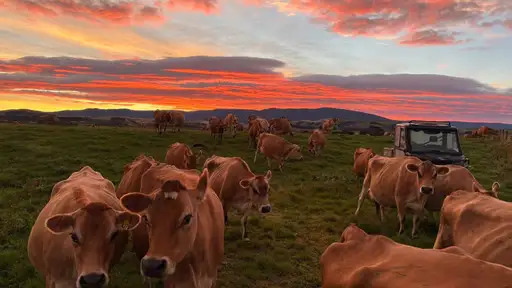
The couple run a pasture-based crossbred herd with a peak number of 170 cows, milking twice a day. A worker covers the morning milking and Nicky is in the shed in the afternoons.
The farm has been part of Donald’s life for decades. He grew up there in the 1960s, and after a career change, the couple bought the farm in the early 1990s.
They ran it through to the early 2000s before moving back to town, returning in 2013 after a decade with contract milkers in place - a move Nicky says surprised some.
“Everyone thought we were coming back to a lifestyle block.”
With their four adult children settled in town and no immediate plans for the farm to change hands. Nicky says the focus is on keeping the operation manageable for themselves.
“This is our retirement. We’re not looking to sell up. We want to stay on the farm, but in a way that works for us.”
Reducing the work
That thinking has shaped how they’ve brought technology into the business.
Rather than relying on a single system, Donald and Nicky utilise MINDA for their herd recording and make use of the integration capabilities to help manage milkings, matings, animal health and compliance.
They are currently sharing their MINDA data with Fonterra, MilkHub® and CowManager®, and are also using SenseHub® Dairy for on-farm livestock monitoring.
“If a job’s getting hard, we try to figure out a way to make it easier. We’re all about making things simpler so we can keep going," Donald says.
That mindset has led to steady changes over time, particularly around mating and herd management. CowManager has been part of their system for several years, and this season they moved fully away from tail paint, choosing instead to rely on wearable data.
The result was a simpler process and a lower empty rate. Donald says it’s cut about half of his labour around mating.
“I’m not out there tail painting or trying to pick cows in the paddock - it’s taken a whole chunk of that work away.”
Moving away from natural-mating bulls has also taken pressure off from a management and safety perspective.
“Bulls are hard work. You’re always managing them, keeping them where they need to be. Not having them on farm just makes things easier.”
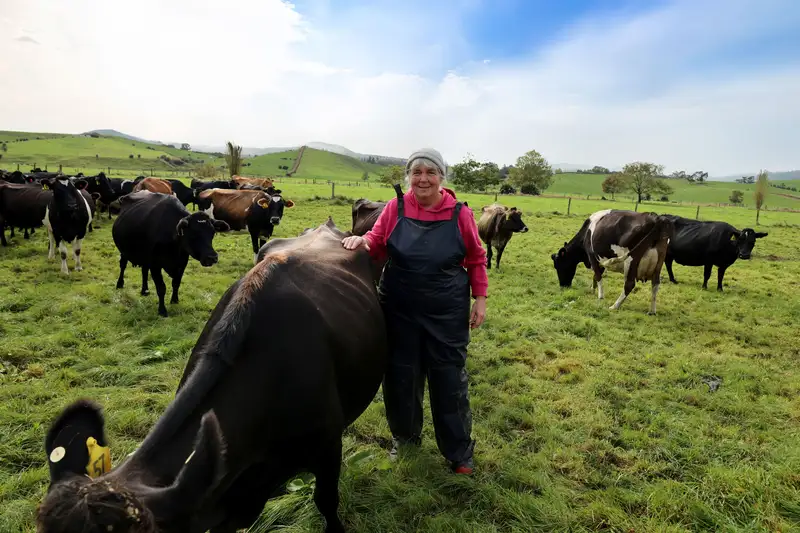
Nicky McGiven with their KiwiCross herd
One source of truth
The gains don’t come from one big change, but from removing the need to do the same job twice.
For Donald and Nicky, that comes down to using MINDA as a central hub and making the most of the integration capabilities to keep information flowing into the systems they use every day.
“Inseminations, pregnancy, removals come through. Natural increase, tagging - everything comes through MINDA.”
Instead of entering the same information across multiple platforms, it’s recorded once and shared automatically, often done on the go. Nicky says they have found the integrations in MINDA just work.
"You can use it on your phone, and that makes a big difference when you’re out in the paddock. You don’t have to put the numbers in twice or re-enter anything - it’s all just done.”
Donald says on a smaller farm, that reduction in workload makes a real difference.
“Labour is expensive when you spread it across fewer cows. We’ve found running with integrations is the way we can make it work and still get a return on the property.”
That same flow of information also supports compliance. Through their integration with Fonterra Farm Dairy Records (FDR), key data is already where it needs to be for reporting, without extra admin.
“It saves a lot of time. You’re not going back and trying to pull everything together – it’s already there.”
Having everything flowing through MINDA has also improved the accuracy of their records and made day-to-day management simpler.
“When someone needs to see your records, everything’s there,” Nicky says. “Otherwise, you’d be fossicking around in paper trying to find things.”
Working through a challenge
That clarity has been particularly valuable this season, as the couple work through mastitis challenges in the herd.
Getting on top of somatic cell count and identifying problem cows has been a major focus this season. They’ve introduced additional monitoring tools to understand what’s happening within the herd and how to manage it long-term. Catching those changes early has helped them act sooner, even when cows don’t show obvious signs.
“It might look fine in the paddock, but if our animal monitoring systems are telling you something’s not right, you can draft her out and check.”
Those early alerts, combined with accurate records in MINDA, help build a clearer picture over time. Nicky says their vets are also using MINDA reports to help identify patterns, flag problem cows and support decisions around treatment and culling.
“They print out the graphs and go through it with us - you can actually see where the problems are sitting."
What comes next
Looking ahead, Donald and Nicky are interested in taking integration further.
One area Donald says they are particularly interested in is connecting MINDA with their MilkHub drafting system. Being able to draft directly from MINDA into their existing set-up would remove another layer of manual input and reduce the workload even further.
“If we can get everything talking to each other properly, that’s the next step. The more MINDA does, the better off we are.”
At one point, the couple thought the future might involve stepping back into a simpler beef system. Now, they see things differently.
“We thought we’d go down to beef slowly. But with the technology, this is easier than running beef.”
“Milking cows is still our future, because all the infrastructure is now set up for efficiency."
For their farm, Donald says it comes back to one thing.
“Survivability is our main objective. And integrations are key to keeping the work manageable for us.”
On a farm that has been part of their lives for so long, that matters - not just for the time saved, but for the ability to keep farming on their own terms.