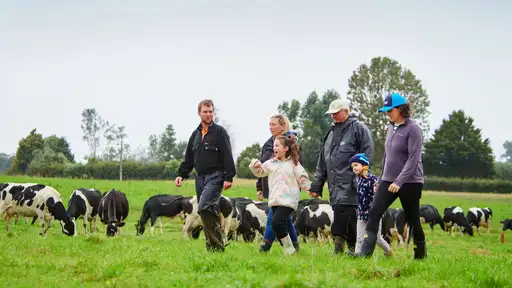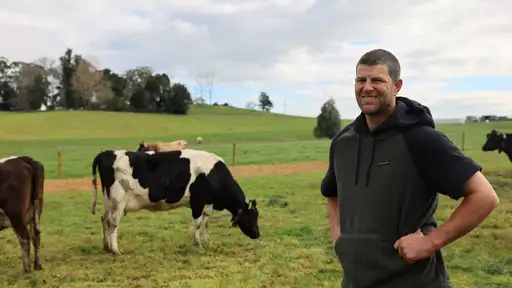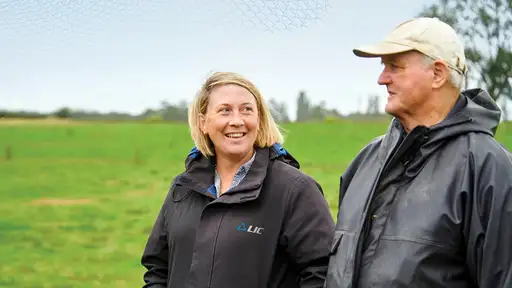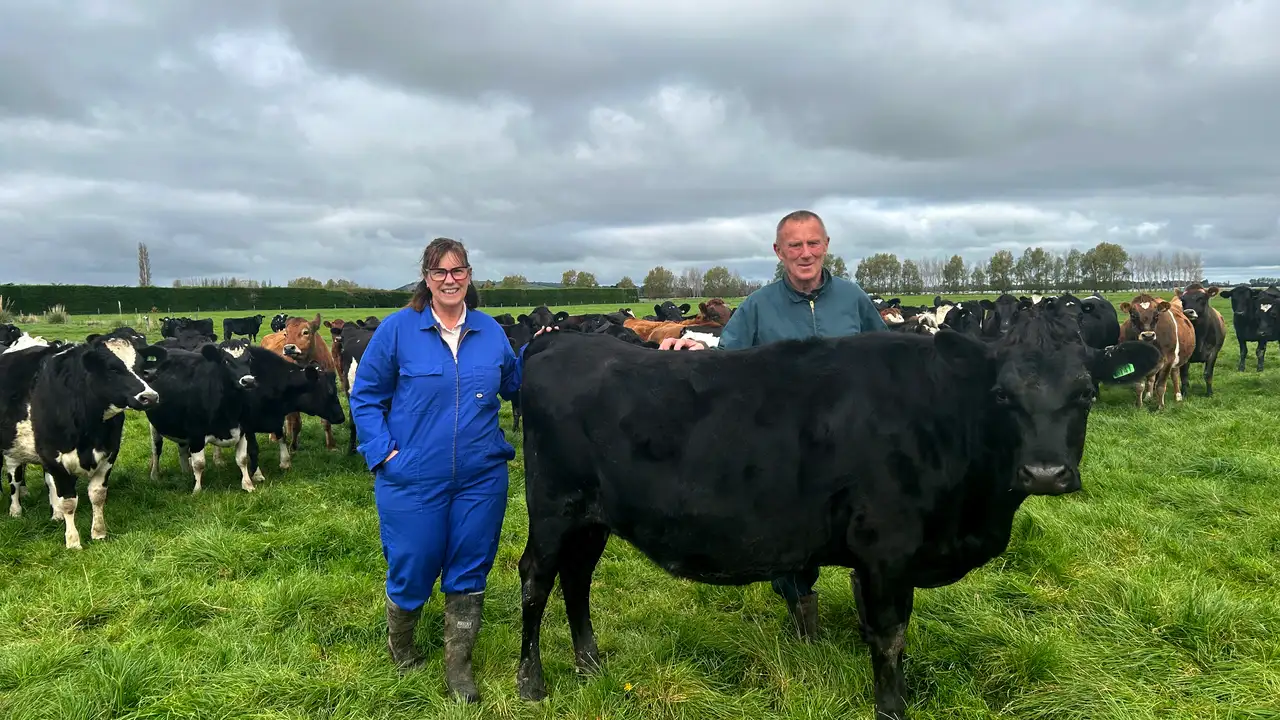
With a focus on long term performance rather than short term gains, they have bred better cows, year after year. Today, their 585 cow herd ranks in the top 1% in New Zealand for BW, a measure that reflects both the discipline behind their approach and their commitment to genetic improvement.
That same long-term mindset has guided an impressive growth journey. In 1993, Colleen and John moved to Southland after sharemilking 300 cows near Te Aroha in the Waikato. Over time, they steadily expanded cow numbers and purchased several small neighbouring farms before acquiring their current 169-hectare property, Kahikatea Dairy, in 2006.
Developed through long-term use of LIC’s Premier Sires® bull teams, their herd is predominantly crossbred and runs on a grass-first system, producing an impressive 305,000–310,000kgMS this year, or approximately 1,800kgMS/ha.
Colleen says maintaining that performance comes back to sticking with a breeding strategy they trust.
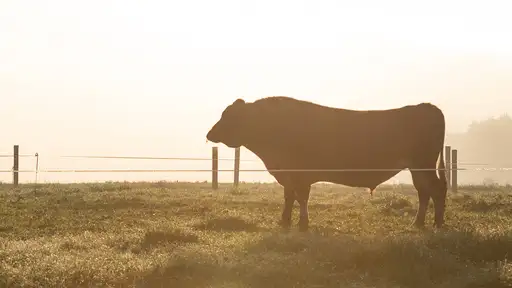
“We’ve always used the bull team. Only a handful of bulls make the cut into LIC’s Premier Sire teams from hundreds, so we trust the process and it’s paid off for us.
“We started using Jersey genetics over our yearlings for calving ease and to build numbers, but over the years good calving ease KiwiCross® bulls became available, and this has given us a great range for our system.”
While genetics play a key role, Colleen says disciplined culling has been a big driver of their progress.
“Culling, done correctly, has been huge for us. We rear extra replacements so we can be tough on empties and any wastage. That way we can cull on production traits, not just necessity.”
An analysis of their herd improvement plan with LIC several years ago revealed that lower BW heifers were coming from older cows, and Colleen says this insight helped sharpen their approach to culling.
“We took this insight on board, and since then, anything over eight years old leaves the herd to ensure replacements come from our best performers - which has made a real difference."
This selection pressure has been enabled by excellent reproduction performance which has helped their herd’s performance steadily lift year after year.
While wintering cows only on grass and silage is rare in Southland, John says they have found a system that works well for them.
“For the last 16 or so years, our cows have only been on grass and silage wintering, no crops at all. We’re lucky that we have a property for our wintering that suits our system."
Their approach centres on keeping cows fully fed and comfortable to prevent condition loss, while also actively managing the risk of the herd becoming over conditioned. Strategic use of grain in the spring and careful winter feeding with grass and silage help to protect condition and support the herd’s performance through calving.
Technology also has a key role in how the Neustroskis make breeding and management decisions, and they have steadily incorporated tools that give them greater clarity and confidence.
Colleen says one of the most notable has been GeneMark® Genomics.
“DNA parentage has been quite critical for us. We’re now 100% ancestry-recorded, which gives us confidence we’re keeping the right calf from the right cow.”
This parentage certainty ensures their best cows continue to drive progress in the herd and removes the guesswork that can quietly erode genetic gain.
Colleen says heat detection is another area where simple technology adds real value. Heat patches are used annually as a “safety net”.
“You still have to interpret the signs, but they’re helpful when you can’t watch everything. They give us confidence around timing, especially during busy periods when constant watching isn’t possible.”
Short gestation semen has also become an essential part of their system, helping them tighten the calving spread and manage late calvers more effectively.
“Short gestation length semen has been a great tool for late calvers. We go to a lot of trouble to make sure those calves are separated so they aren’t accidently reared.”
This discipline reflects Colleen and John’s wider attention to detail across the farm, with every mating decision being intentional.
Alongside genetics and reproduction, Colleen says they've made steady progress in animal health, particularly somatic cell count (SCC).
“We've been looking really hard at cell count, and have always done at least four herd tests a year.”
“When we consider our SCC levels, 150,000 was fine years ago - now we like to sit around 50,000–75,000.”
Regular herd testing, combined with their recently upgraded mastitis testing machine, gives them the information they need to make quick, accurate treatment decisions. John says, the impact has been clear: “Last spring, we didn’t find a single case of mastitis until mid October.”
Despite the added technology, Colleen says the fundamentals still matter most.
“The cows will look after you if you look after them. Feed them properly, breed them well and don’t cut corners.”
By trusting proven genetics, applying disciplined culling and using technology to support on-farm decision making, the Neustroskis have built a herd that continues to improve year after year.