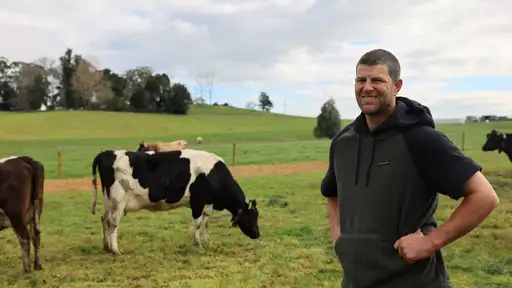
After 25 years of veterinary practice, Andrew Weir joined LIC late last year. He is passionate about helping farmers keep their herds healthy, productive and protected. We sat down with Andrew to discuss the role persistently infected (PI) animals have in BVD spread, and what farmers can do to safeguard their herds.
What is a PI animal and why are they such a problem in BVD spread?
BVD control really comes down to finding and removing PI animals. A PI animal is one that was infected with BVD before it was born, so it carries and spreads the virus for its entire life.
PI animals are extremely efficient at spreading BVD. In my PhD study, for example, one herd of nearly 1,000 cows across three mobs had a single PI milking cow. Within about four months, more than 95% of the susceptible animals had been infected!
The good news is that once PI animals are found and removed, infection typically dies out quickly. The challenge is that pregnant cows can still be carrying infected calves, which restart the cycle once they’re born.
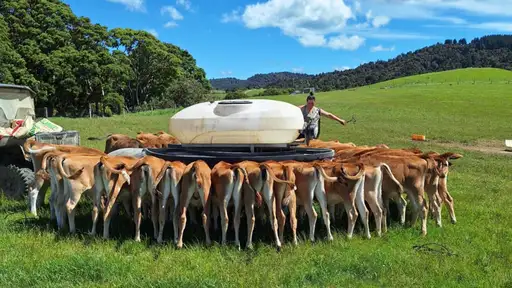
It doesn’t take much for BVD to find its way into a herd. That could be a pregnant cow having contact with an infected animal over the fence, or contaminated boots, gear or vehicles coming onto the farm. If a PI calf is born and not identified before mating, it can quickly spread infection and create another generation of PI animals. That’s why I encourage farmers to test their replacement calves every year.
With spring calving approaching, what practical steps should farmers take now to protect their replacement heifers from BVD?
If BVD isn’t active on your farm, it is likely your heifers haven’t been exposed to BVD before so are highly susceptible to infection.
If heifers become infected during the first four months of pregnancy, they will either abort or give birth to a PI calf. In severe cases, a quarter of the heifers can end up empty, or give birth to deformed or PI calves. That’s a result no farmer wants, especially during an already busy and stressful time of year.
There are two main ways you can reduce your risk of something like that happening to your herd:
- Vaccination:
Vaccinating heifers helps protect them against BVD infection and helps prevent PI calves from being produced. - BVD-free grazing:
Alternatively, you can arrange grazing on properties where all animals have been tested, including bulls and any beef cattle. It’s also important to ensure transport trucks are clean and boundary fences are secure.
Vaccination is straightforward and gives you peace of mind, but as more people test their calves, BVD-free grazing offers an easy alternative to manage, with additional benefits like greater confidence in the health status of your returning animals.
What separates herds that successfully control BVD from those that continue to struggle with it?
Most dairy herds in New Zealand are already doing bulk milk testing, which is an excellent starting point. If that’s all you do - and then clear the infection when it comes in from time to time - you’re probably getting about half of the benefit compared to a more complete control programme. That alone is a big improvement.
But the farms that tend to stay on top of BVD usually use one or both of the main control tools (herd vaccination, and/or replacement calf screening).
It’s usually cheaper to screen calves as you only need to screen replacements, in comparison to vaccinations which need to be done for all adult cows each year. Both approaches work well, and many farmers choose the option that best fits their system.
Beyond local disease control, what wider business benefits come from having confidence in a herd’s BVD status?
Many farmers appreciate knowing they are doing the best by their cowsand enjoy a sense of satisfaction from knowing they have a healthy herd. I think that’s something we should encourage and be proud of as an industry.
New Zealand has already reduced the number of infected dairy herds significantly from 15% down to just under 5% through bulk milk testing. While this is great news, it’s important to point out that these figures have plateaued in recent years, which suggests we need to take further steps if we want to drive infection rates down even more.
Knowing the BVD status of cattle should be important when buying and selling stock. Tools like LIC’s MINDA herd improvement software which records a lifetime BVD status, make it easier for farmers to check an animal’s history and avoid introducing PI animals into their herd. The BVD Status Pack provides a simple and reliable way to confirm the individual BVD status of every animal in the herd.
If more herds were testing their calves and insisted on buying only BVD-free animals, we could make a real impact and further reduce the amount of BVD in New Zealand.